Miscellany Vol. III: Doom 3 Cabinet, Mad Gear and Prototypes
Volume III turns up Street Fighter echoes in unexpected games, plus a few finds from deep inside ROM data and Final Fight’s translations.
A parody cabinet in Doom 3
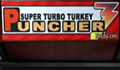
Id Software’s Doom 3 (2004) hides a joke at the start of the game. In the kitchen area of Mars City stands an arcade cabinet called Super Turbo Turkey Puncher 3, credited to a maker named “Nabcon”. It mocks the Street Fighter franchise, and its marquee lettering resembles that of Street Fighter Alpha 3. It also holds a second gag: using the machine puts you in control of the original Doom marine’s fist. Beat the top score of 25,000 and a message arrives on your PDA from “HR Coordinator”, dated 12-12-2145, congratulating you, remarking that your parents can rest easy about raising such a shining example of humanity, and docking two days of vacation for all the time spent punching defenseless turkeys.
A comedian in the sprite sheet
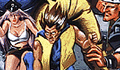
The Japanese comedian and wrestler Masaki Sumitani, who performs as Razor Ramon Hard Gay, exists as a single sprite among Ingrid’s graphics in Capcom Fighting Evolution. He is never seen in play and can only be found by ROM hacking, which makes it one of the stranger discoveries in the series. The sprite shows correctly only when the palette from Ingrid’s “Midnight Bliss” costume is applied. Midnight Bliss is a special move of Demitri’s that transforms an opponent, usually for comic or suggestive effect.

Captain Commando and the Bushin-ryu
The arcade flyer for Captain Commando (1991) says that Ginzu the Ninja, called Sho in Japan, is heir to the Bushin-ryu school of ninjutsu. That matters because Guy, from Final Fight and Street Fighter, is the 39th grandmaster of that school. Final Fight and Street Fighter clearly share a world, but whether Captain Commando does is open to debate. Scraps of evidence like this one support a theory that it takes place in a futuristic Metro City.

Final Fight’s muddled names
Many Final Fight enemy names look like translation errors. Bred and El Gado may come from confusing the katakana for “To” and “Do”, since Bret and El Gato would be more familiar. Others seem to come from a translator who did not know common English names: Dug for Doug, Simons for Simon, Andore for Andre. Rolento may be the most tangled. Swapping the L and R sounds suggests Laurent or Laurence, while another mix-up of “To” and “Do” could make him Roland.
Prototype Ryu and Ken
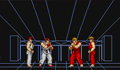
The original Street Fighter ROM contains early versions of Ryu and Ken, each limited to one sprite. Ryu has brown shoes and gloves instead of red, shorter hair like later artwork, and a grimmer face. Ken wears a red bandana, brown shoes and brown gloves, whereas his final form loses the slippers and headband and has yellow gloves. The ROM also holds an unfinished stage, rough and abandoned early, which exists only as a black and blue outline.
The Animated Movie in manga form
Takayuki Sakai adapted The Animated Movie as a manga, serialised in CoroCoro Comic in 1994 and gathered in one volume in 1996. It is lighter in tone than the film and looks cruder. The story changes things: Guile is introduced as a brainwashed double of Ken, wig included, working for Shadaloo; a tree breaks Vega’s fall from Chun-Li’s apartment; and Cammy assassinates the Mahatma rather than the Minister. It closes with a cheesy epilogue about superhuman beings who called themselves warriors and were known as Street Fighters. Stills from the film would arguably have worked better.

Where Mad Gear got its name
The gang that dominates the first two Final Fight games takes its name from a 1988 Capcom arcade title, known abroad as LED Storm. Mad Gear is a top-down racer with controls and graphics that recall the Micro Machines games of the 1990s. Sharp-eyed fans can also spot the Mad Gear logo on the T-shirt of a bystander in early artwork of Blanka eating an ice cream, first printed in the Complete File for Street Fighter II and again in Udon’s 20th anniversary retrospective.